

- Late Pleistocene Era : Evidence of human settlements was found in Northeast India.
- Paleolithic Sites: Notable discoveries at Khangkhui, Napachik, Machi, Somgu, and Singtom.
- Neolithic Period:
- Establishment of settlements at Nongpok Keithelmanbi, Napachik, Laimenai, Naran Siena, and Phunan
- Development of distinct pottery styles, including three-legged pottery and cord-impressed ware.
- Cultural similarities with Southern China and Thailand, suggesting trade and cultural exchange

King Nongda Lairen Pakhangba (33-153 AD)
- He is considered the first famous king of Manipur
- Made Kangla as a significant political center
- He established the Ningthouja dynasty
- He issued coins and unified the ethnic groups which led to the formation of Manipur realm.
- His reign is notable for organizing a Polo Match (Sagol Kangjei) in the Imphal Polo Ground, the oldest Polo Ground in the world.
Various Names of the Region during this broad period
- Sanna Leipak
- Tilli Koktong
- Poirei Lam
- Mitei Lipak
- Meitrabak
- Known as Cassay (by Shans), Kathe (by Burmese), and Meklee (by Assamese)
Meidingu Loitongba (1121-1149 AD)
- He was a man of games and sports. It is mentioned that he invented the game of “Kang-Sanaba” of meiteis. Some scholars argue that Kang-Sanaba had already existed and Loitongba was a master of the game.

12th Century
- Emergence of Kangleipak State under King Loiyumba. He was a was a Meitei monarch.
- King Loiyumba was the first king to order a written constitution in the 11-12th century CE which is known as the Loiyumpa Silyel (Loiyumba Sinyen).
- Sanamahism originated in Kangleipak state, the ancient Meitei civilization. Sanamahism, also known as Meiteism, is a polytheistic religion and the indigenous faith of the Meitei people of Manipur.
Reign of King Ningthoukhompa ( 1432-1467 )
- Defeat of Moirang forces happened during this time.
- Leima Linthoingambi was the queen of king Ningthoukhomba saved the kingdom During the Ankla invasion by offering strong wine at the king's absence.
- Successful repulsion of Tankhnu rebellion
Reign of Meidingu Senbi Kiyamba (1467-1507)
- This period saw the decline of Sanamahism
- Introduction of Vaishnavism and the worship of Pheiya as Hindu God Vishnu.
- Kiyamba built a brick temple in the capital Lamangdong south of Imphal. Lamangdong was subsequently named Bishnupur (Abode of Vishnu) in honour of the temple.
- This resulted in Migration of Brahmin people to this region.
- Kiyamba's royal edicts have been found in the script in a stone inscription at Khoibu.
- Kiyamba introduced a system for counting years called Cheithaba, by which each year is named for a person who would take responsibility for the suffering of the kingdom during that year.

Reign of Gharib Niwaz (1709-1748)
- He was born as Pumbeitha and later changed his name to Gharib Niwaz.
- He renamed the kingdom from Kangleipak to Manipura which has a sanskrit origin.
- He defeated Burmese troops Toungoo Dynasty at the confluence of Chindwin and Ru Rivers.
- He successfully defended against Burmese and Tripuri attacks in 1723.
- The conquest of Saigang city on the Irrawaddy in 1738 highlighted his military prowess.
- According to historian Gangmumei, during the reign of Garib Niwaz, the Manipuri empire achieved the peak of its power and consolidation.
- He introduced Hinduism as the state religion of his kingdom (1717).
- He forced conversion of Meitei population to Hinduism.
The legendary burning of Sanamahism sacred scriptures - 1729
- Burning of the Puya Meithaba, or Lairik Meithaba
- No primary source exists for the libricide.
- Gangmumei Kamei notes that the libricide was referenced for the first time in the works of Khumanthem Kaomacha, a Brahmin balladist-turned-historian in his 1934 publication — Manipur Itibritti.
First treaty with British East India Company (1762)
- This treaty is recorded as Meckley
Reign of Maharaja Bhagyachandra (1762-1798)
- Creation of Ras Lila dance form
- This period saw large-scale spread of Vaishnavism.
- Bhagyachandra and his successors issued coins engraved with the title "Manipureshwar" and other royal insignia.These coins not only served as a medium of exchange but also as symbols of Manipur's political legitimacy and cultural identity, reinforcing the kingdom's sovereignty. They removed the term Meckley. The transition from "Meckley" to "Manipureshwar" encapsulates a transformative period in Manipur's history, characterized by cultural resurgence and political assertion.
- Defense against multiple Burmese invasions
Princess Kuranganayani becomes queen of Ahom (1768)

Seven Years Devastation (1819-1826)
- The Seven Years Devastation, also known as Chahi Taret Khuntakpa, was a period from 1819–1826 when the Burmese Empire occupied the Kingdom of Manipur.
- Burmese invasion during King Marjit's reign
- Period of chaos and widespread destruction
- Formation of Manipuri Levy (first standing army) - In 1823, the British Government opened communications with Gambhir Singh; upon which 500 Meiteis under his command were taken into pay of the British Government, and co-operated with the British troops in driving out the Burmese out of Cachar. This force of 500 men was known as Gambhir Singh Levy (later Manipur Levy).
Anglo-Manipur War (1891)
- A short armed conflict between the British and the royal princes of Manipur Kingdom
- This led to the British victory and end of independent Manipur
- The British conquered Manipur and did not annex it under British India but governed it as a princely state till 1947.

Maharaja Churachand Singh (1891-1941 AD)
- During his reign, NUPI LAN I (Woman’s war, 1904 AD, a revolt against the forced labor) and NUPILAN II (1939AD) occured.
Maharaja Budhachandra Singh
- World War II broke out in Manipur from April 1942-Jan.
- First Japanese bombing of Imphal during World War II - 1942
- Manipur was bombarded continuously for two years and the country was destroyed completely including Imphal and the Maharaja’s Palace.
- Battle of Imphal (March 6 - June 22) - Japanese armies attempted to destroy the Allied forces at Imphal and invade India, but were driven back into Burma with heavy losses. it was a failed Japanese invasion attempt.
- Involvement of Indian National Army under Subhas Chandra Bose was seen.
Initial independence after British rule - 1947
- Merger agreement with India which was signed between Maharaja Bodhchandra Singh and Indian government which was effective from October 15, 1949
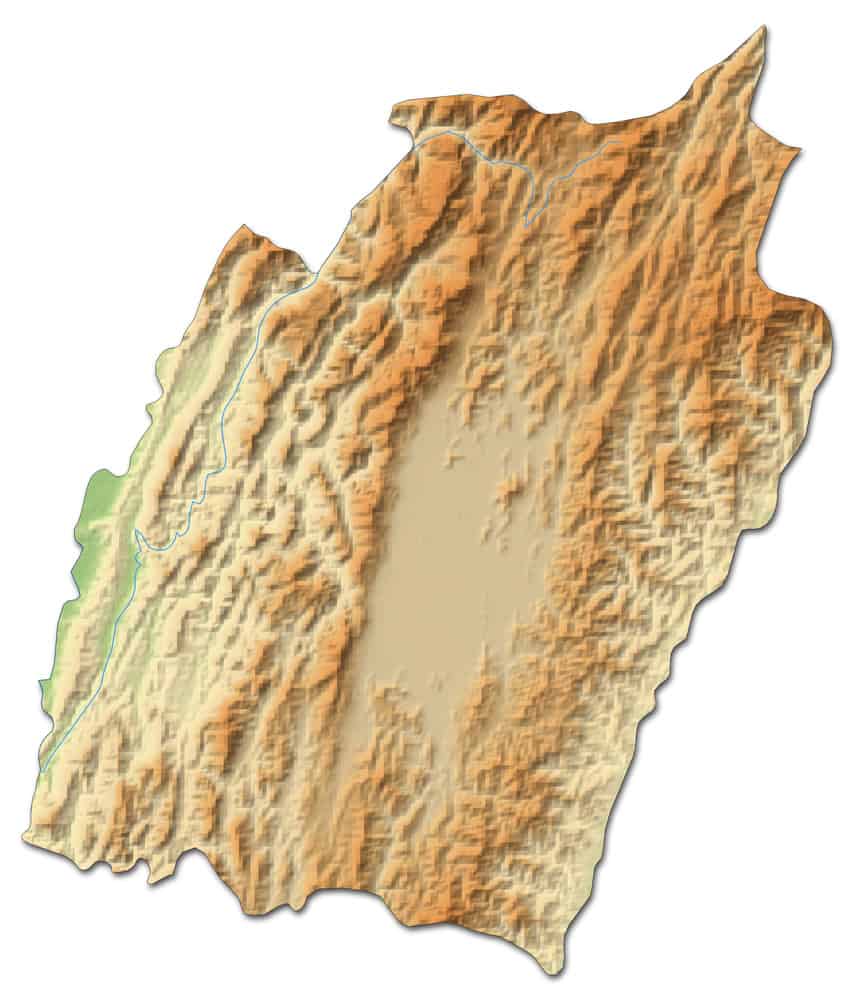
Mount Tempü (Mount Iso) Peak
- Highest peak in Manipur, located in the Senapati district
- Elevation:2,994 meters
- Significance: Second highest peak in the Barail Range
Mount Koubru
- Revered in local mythology and significant for the Meitei people.
- Elevation of 2,131 m
- Part of the Kangpokpi district.
Cheirao Ching (Thangjing Hill)
- Elevation of 2,109 m
- Located near the Imphal Valley.
- Known for its cultural importance and association with local festivals
Tuju Pass
- Tuzu Pass is located in the southeast of Manipur on the border with Myanmar.
- The route to Myanmar passes through this pass.
Keibul Lamjao NP
- It is the only floating national park in the world, and an integral part of Loktak Lake.
- The national park is characterized by floating decomposed plant material locally called phumdi.
- Natural habitat of the endangered Eld's deer.
Shirui National Park
- It has dense tropical forests all over and temperate forest in the hilltops.
- The famous shirui lily (Lilium mackliniae) grows naturally.
- Rare birds like Blyth's Tragopan and Mrs. Hume's bar-backed pheasant inhabit here.
Yangoupokpi-Lokchao Wildlife Sanctuary
- This sanctuary has Hoolock gibbon (Meitei: "Yongmoo" or "Yongmu") is the only ape species found in India.
Kailam Wildlife Sanctuary
- It is also a Tiger Reserve cakked as Pakke Tiger Reserve
- It is bounded by Bhareli or Kameng River in the west and north, and by Pakke River in the east.
- It has won India Biodiversity Award 2016 in the category of 'Conservation of threatened species' for its Hornbill Nest Adoption Programme.
Jiri-Makru Wildlife Sanctuary
- Most of this sanctuary, about 80% is covered with grass
Bunning Wildlife Sanctuary
- It is located in the Barail Range.
Zeilad Wildlife Sanctuary
- It is home to seven lakes, with Zeilad Lake being the largest.
Khongjeingamba Sanctuary
Thinungei Bird Sanctuary

Barak River
- Originates from the Manipur hills in Senapati district.
- It flows along the Nagaland-Manipur border, enters Assam, and then Bangladesh.
- Tributaries – Jiri, the Dhaleswari, the Singla, the Longai, the Sonai and the Katakhal.
- Soil types - laterite and red and yellow soils.
Makru River
- Its the tributary of Barak River.
- Jiru - Makru Wildlife Sanctuary is located on the banks on Jiri and Makru River.
Irang River
- Tributary of the Barak River.
- A new Reinforced Cement Concrete (RCC) bridge over the Irang River on National Highway 37.
Imphal River
- It flows past Loktak Lake
- Also known as the Turel Achouba.
Iril River
- Dolathabi Project is on the river.
- It still has a large population of endangered indigenous fish called ngaton, Meitei sareng.
Thoubal River
- The Mapithel Dam is constructed on the river.
Nambul River
- The Nambul river is one of the main perennial sources of water for the Loktak Lake.
Loktak Lake
- The lake is located at Moirang
- It's the largest freshwater lake in Northeast India.
- Known for its floating circular swamps, which are called phumdis.
- It houses Keibul Lamjao National Park, the only floating national park in the world.
- The park is the last natural refuge of the endangered Sangai (state animal)
- The lake is designated as a wetland of international importance under the Ramsar Convention on 23 March 1990.
- It was also listed under the Montreux Record in 1993.
- Loktak Day is observed every year on the 15th of October at the periphery of the Loktak lake.
